Free dinosaurs printable
3 Dinosaur Drawing Prompts for Kids Ages 8–10
Try three original free dinosaur drawing starters: change the viewpoint, invent a moving pose and finish a three-panel story. Includes parent prompts and separate PNG downloads.
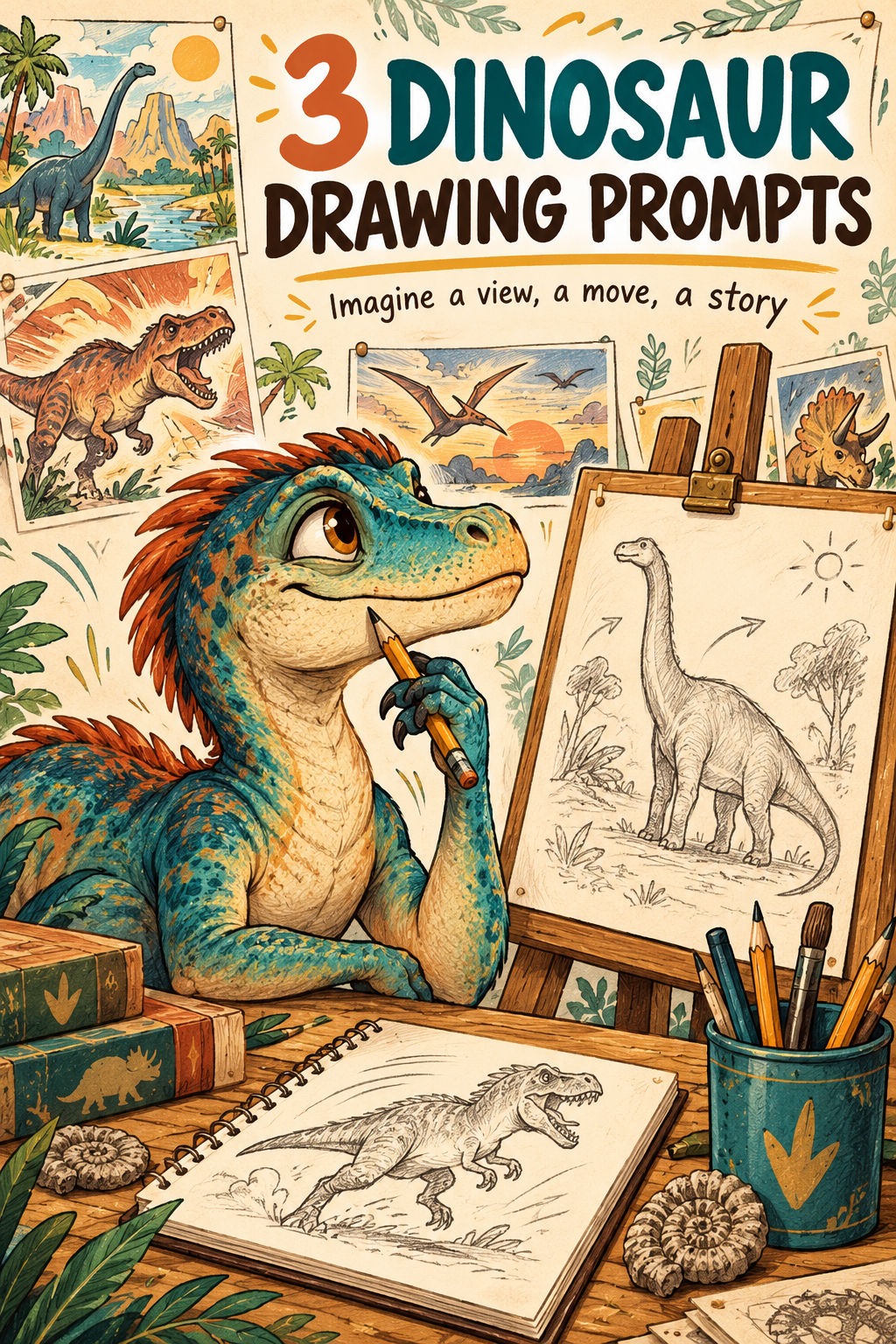
A finished dinosaur outline gives a child something to color. A drawing starter gives them a decision to make. These three free BoysColor pages ask for a new view, a new pose and a new event. The reference drawings stay simple so the child can spend their effort on an idea rather than reproducing every little line.
Ages 8–10 is a suggested audience for the open-ended challenge, not a drawing standard or a promise about development. A younger child may enjoy the story page with help; an older child may turn a single pose into a detailed sketch. Let interest and comfort decide where to begin. These are imaginative cartoon dinosaurs, not scientific reconstruction exercises.
Each black-and-white PNG below has its own free download link. The empty frames are intentional drawing spaces, not missing pictures. The colorful cover is a separate illustration, and the optional Creative Fabrica activity collection later in the guide is another creator’s product. None of its pages is needed to use these free starters.
Make the first choice smaller than the whole picture
Print a chosen PNG on Letter or A4 paper using Fit to page. Check the outside frame before printing several copies. Bring a pencil, an eraser if wanted and a few coloring pencils or crayons. A scrap of paper is useful for trying a shape before putting it inside the frame. Print one starter first rather than handing over three unfinished assignments.
Ask which kind of invention sounds interesting: seeing a dinosaur from another direction, making it move or deciding what happens next. Read only the chosen prompt. There is no tracing requirement, numbered sequence to copy or finished answer that a grown-up needs to demonstrate. If a blank frame feels too large, invite one head, one body shape or one next event as the whole first round.
For a more involved session, ask the child to choose one detail to keep consistent: a horn shape, a spot on the body or a little tail tip. Keeping that clue visible is a design game, not a test. They can change their mind halfway through. Coloring may happen at the end, between stages or not at all if the child prefers pencil drawing.
- Choose one page and identify its empty drawing space.
- Try one shape or idea on scrap paper if that helps.
- Add the new drawing, then decide what to color or explain.
1. Change the view: draw the same character facing you
The top frame shows a horned dinosaur from the side. In the bottom frame, imagine it turning to face the viewer. Start with the face rather than the whole body: a broad head shape, a central nose horn and the two longer horns can suggest the new direction. The head shield might look wider when seen from the front. This is a cartoon interpretation, so the child does not have to solve realistic perspective.
Invite the child to keep two recognizable clues from the reference, such as the rounded shield edge and friendly mouth, while changing where those clues sit. The tail may become less visible behind the body. Ask what would disappear from view instead of insisting that every part from the side picture must appear again.
For a shorter version, draw just the new face in the empty frame. For a harder version, draw the whole character and add a small side-view thumbnail on scrap paper to compare. Color one shared detail the same way in both drawings if the child wants the character to be easy to recognize.
- Choose two features that make the reference recognizable.
- Draw the character looking toward you in the lower frame.
- Compare what stayed visible and what changed, then choose a shared color detail.

Download this free printable (PNG)
Ask your child: What makes these two views feel like the same dinosaur?
2. Make it move: change the pose, not just the background
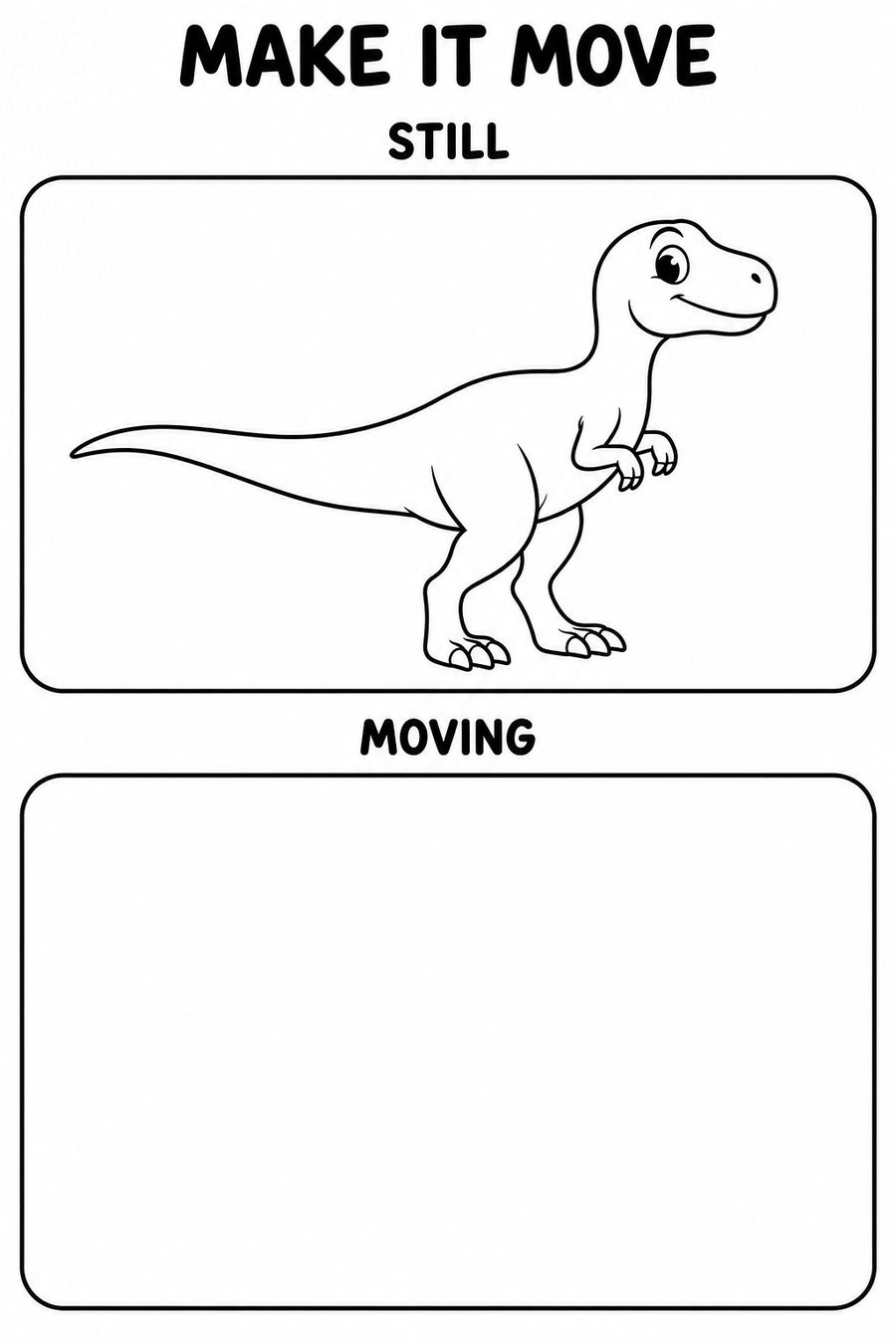
This starter shows a small dinosaur standing still. Choose an action for the lower frame: stretching toward something, turning quickly, taking a careful step or trying a silly dance. Before drawing details, decide where the body will lean and which way the head will point. A tilted oval for the body and a curved line for the tail can be enough to plan the idea.
Try changing one major shape first. A stepping dinosaur might raise one foot; a stretching dinosaur might lengthen the curve of its neck. These are playful drawing choices, not instructions about how a real species moved. Keep the scene safe and imaginary, with no need for a chase or a battle.
After the pose is visible, add one or two motion marks only if they help show the action. A few lines near the tail, a bent knee or a tilted head can tell more than a crowded background. For an extra challenge, have someone guess the action before hearing its name. If they guess something different, ask which part of the drawing gave that impression.
- Name one action and choose which body part changes most.
- Sketch the new body tilt and limbs in the lower frame.
- Add a small motion clue, then color the character or give the pose a title.
Download this free printable (PNG)
Ask your child: Which line makes the movement easiest to understand?
3. What happens next? Finish a three-panel dinosaur comic
The first panel begins a small mystery: a dinosaur has noticed a closed chest. The next two panels are blank. Ask the child to choose what the chest contains before drawing. It could hold a tiny musical instrument, a paper crown, a friendly surprise or nothing at all. A gentle unexpected answer is enough; treasure does not have to mean coins.
Let the middle panel show an action and the last panel show its result. The dinosaur could open the lid and discover a surprise, decide not to open it and carry it to a friend, or hear a sound and look for its source. Keep a recognizable feature, such as the plates or tail shape, across the drawings. The dinosaur may change size within the frame if the child wants a close-up.
Words are optional. A changed expression, a raised lid and an object moving from one panel to the next can carry the story without a sentence. If the child wants dialogue, ask them to leave room for a small speech bubble before filling the frame. A grown-up can write dictated words on the back instead of crowding the picture.
- Decide what the closed chest means in your story.
- Draw one action in the middle panel.
- Draw the result in the last panel and read the three pictures in order.

Download this free printable (PNG)
Ask your child: Which detail helps someone understand your ending without an explanation?
Look back at one decision, not a perfect dinosaur
Ask the artist to point to one choice they made: a front-facing horn, a bent leg, a surprised expression or an object that appears in the ending. A useful response is specific: I can see the head turned toward us, or The raised foot makes me think it is stepping. Avoid comparing the result with another child’s drawing or treating the reference as a picture that must be copied exactly.
If the drawing feels stuck, reduce the task rather than finishing it for the child. Cover part of the empty frame, draw only a face, tell the action aloud or make the last comic panel a close-up of the surprise. Ask before adding a line to their page. Leaving an empty area or saving the sheet for another day is fine.
To revisit a starter, change one decision on a fresh copy: a three-quarter view instead of a front view, a slow movement instead of a quick one, or a new result from the same closed chest. These variations use the same prompt; they are not extra promised downloads. Keep the pages in a sketch folder, with a date or title on the back if wanted.
For a separate activity about designing the surroundings rather than the character, the Dinosaur Habitat guide offers four imaginary places to complete. The three starters here focus on viewpoint, pose and visual sequence. Neither set requires an optional purchase, a full-color printer or specialist drawing materials.
🦕 More dinosaur coloring collections
12 hand-picked coloring page sets on the same theme.