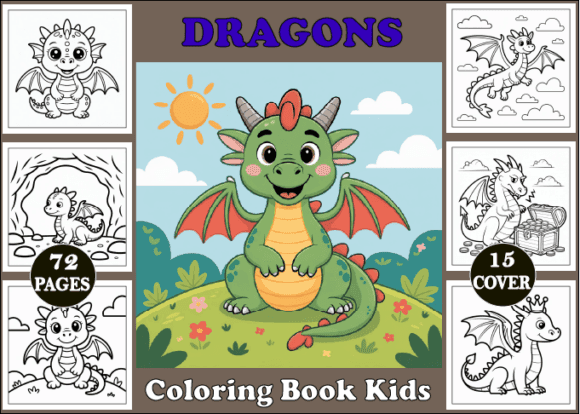
Free dragons printable
Dragon Scale Pattern Lab: 4 Coloring Challenges
Turn four free dragon coloring pages into a playful pattern lab. Try scale stripes, wing codes, a treasure-tail sequence, and a nine-square puzzle. Download each PNG separately.
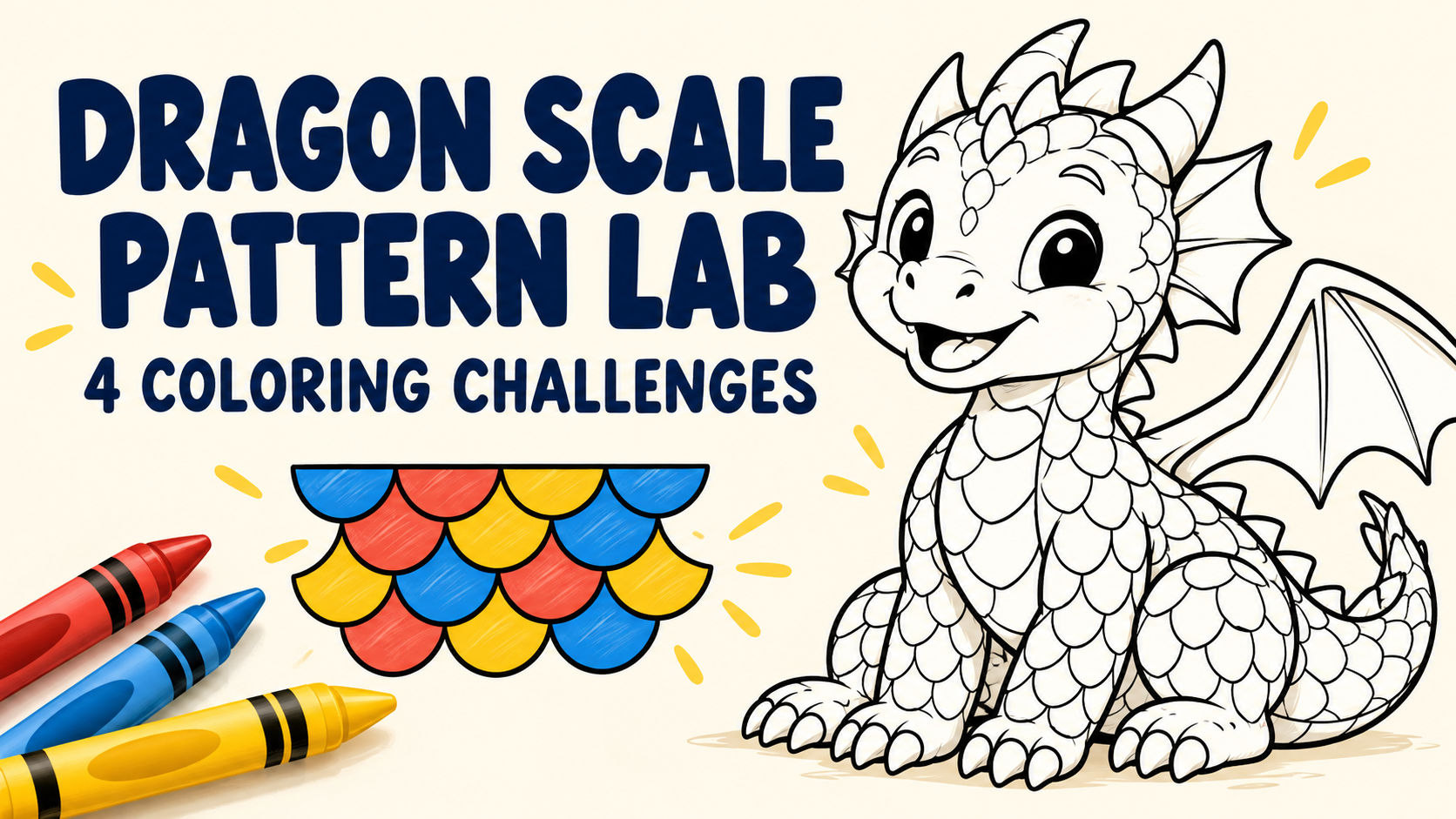
Dragons are fun to color, but “color the whole dragon” can feel vague when a child is ready for a little challenge. This mini pattern lab gives each dragon a simple rule to invent, repeat, or change. Print one page for a quick activity, or use all four across a week. The pages are free, separate PNG files; you do not need to buy anything to try them.
You will need paper, crayons or colored pencils, and a child willing to make a few creative decisions. There is no correct finished dragon. For younger colorists, demonstrate one pattern and let them copy it. For children who want more complexity, ask them to explain their rule and then deliberately break it in one place.
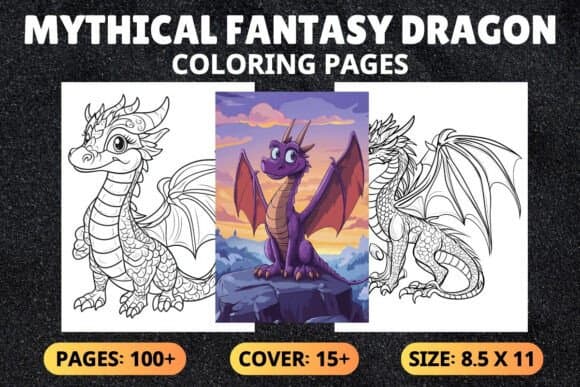
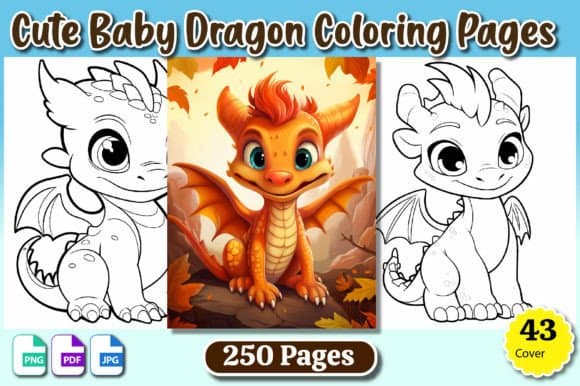
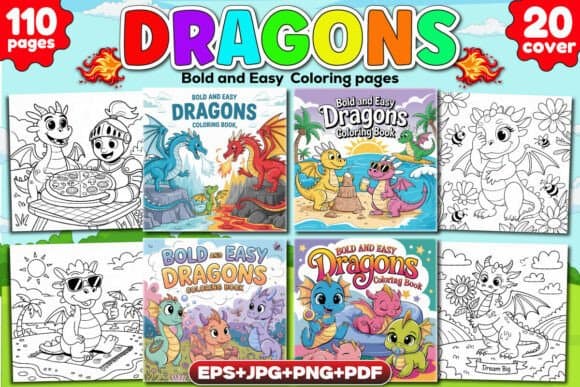
The colorful cover above illustrates the idea. The four black-and-white pages below are the actual free downloads. They are original BoysColor activities, not previews of the separate Creative Fabrica product mentioned later.
Before you start: what counts as a pattern?
A pattern is a choice that repeats. It might be a color order (blue, green, blue, green), a shape order (dots, stripes, dots, stripes), or a design rule (“the scales near the tail get darker”). The child can point to the repeat even if the coloring is imperfect. The learning moment is noticing and describing their own idea, not staying inside every line.
Print at a comfortable scale on Letter or A4 paper. If the drawing looks cropped, choose Fit to page in the print dialog. You can try one challenge or move from a simple two-color repeat to a more elaborate rule.
- Choose one dragon and two or three colors.
- Decide on a rule before filling every space.
- Show somebody where the rule repeats—or where you chose to change it.
1. Stripe the scales
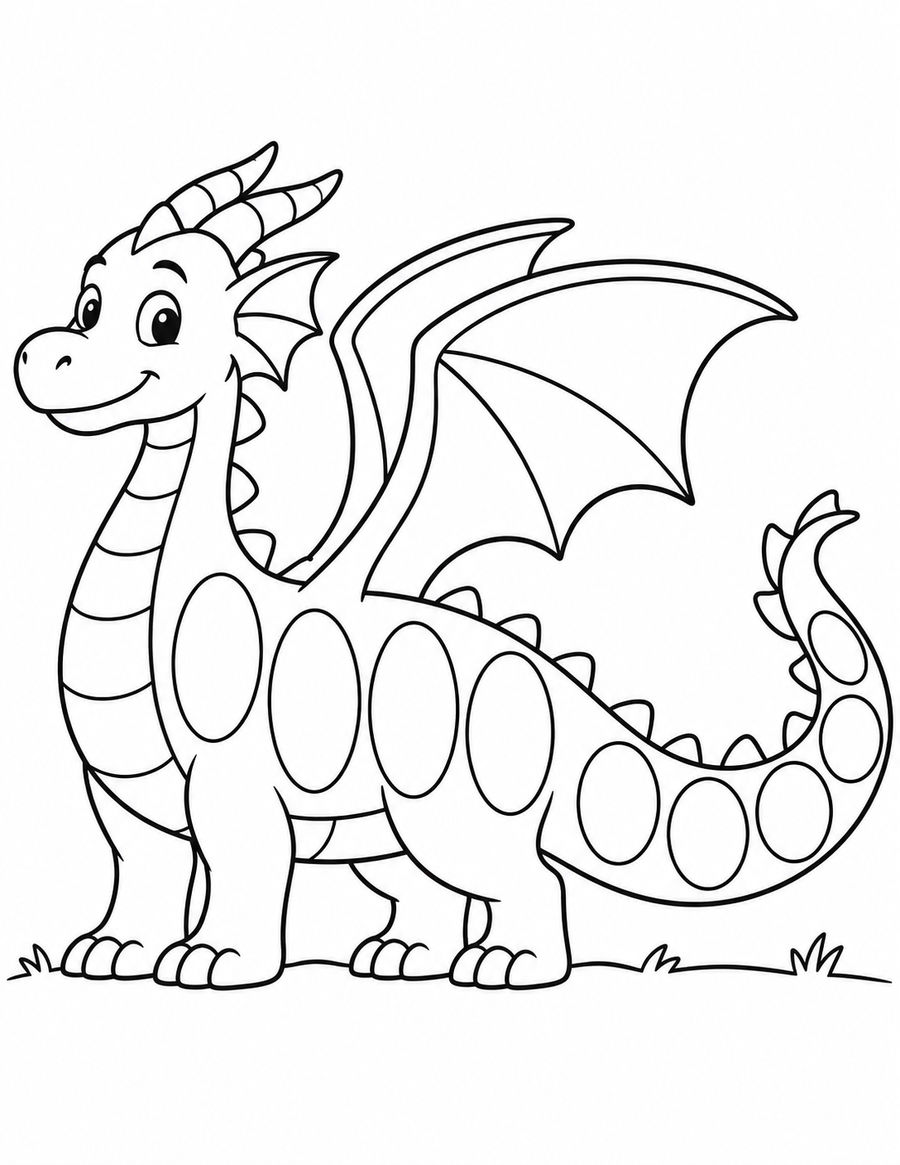
This dragon has roomy oval patches along its body and tail. Pick two or three colors and make a repeating path through those patches. For example, try red–orange–yellow, then start again at red. The child can leave the rest of the dragon plain until the scale sequence is clear.
Color the first three patches as a demonstration. Ask, “Which color would come next if the rule repeats?” Then hand over the crayons. If your child chooses a different next color, invite them to explain their new rule; it is still their design.
Make it easier with only two colors and every other patch first. For a harder version, add a second repeating pattern to the background without changing the dragon’s scale rule.
- Choose two or three colors for the scale patches.
- Color the first small sequence and repeat it along the body and tail.
- Point out the repeat or explain any deliberate change.
Download this free printable (PNG)
Ask your child: What color would come next if your scale rule continued beyond the tail?
2. Give the wings a code
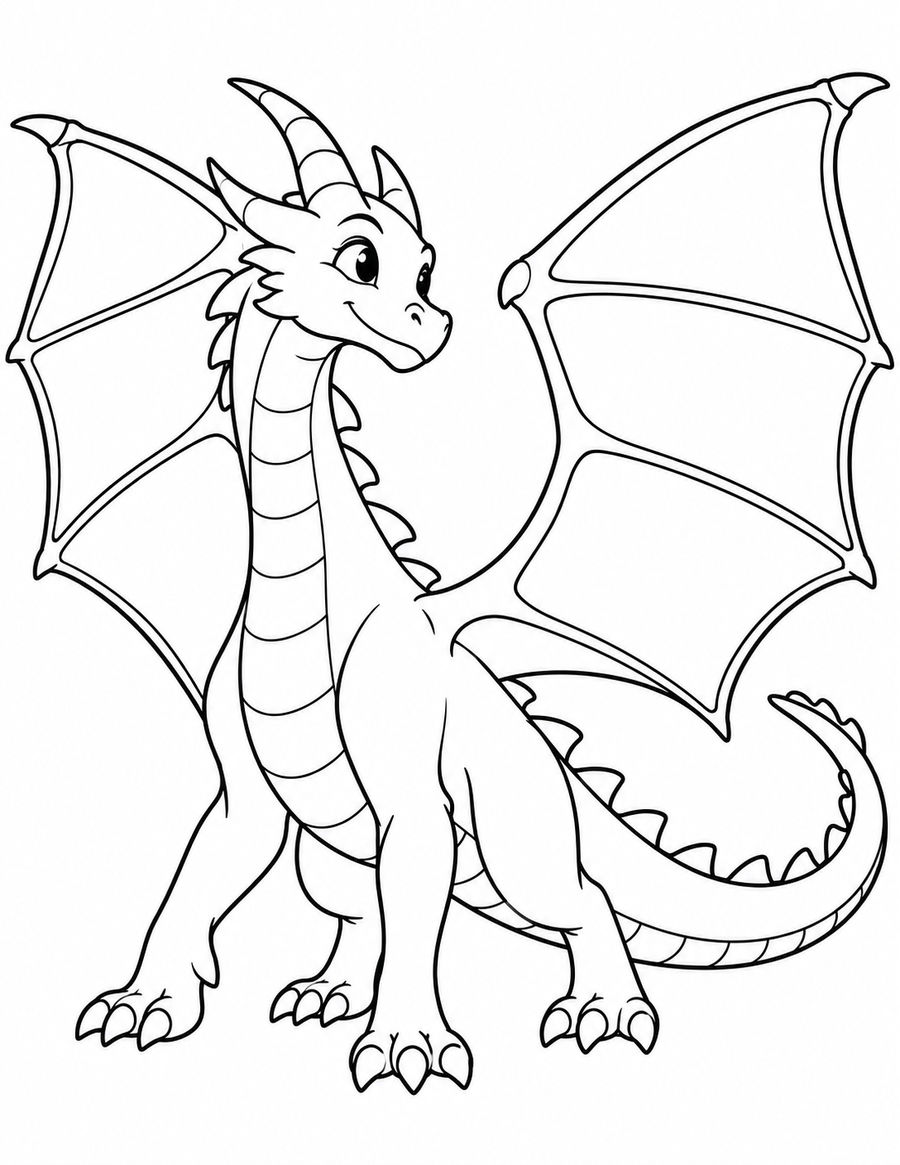
The broad wing sections give children space to try a visual code. Instead of filling every part at random, decide what each mark means. A dot could mean “warm color,” a line could mean “cool color,” and an empty section could mean “leave white.” Put a tiny key in the margin before coloring the wings. Then use the key consistently.
Sketch one dot and one short line on scrap paper. Ask the child to choose the color family for each. Let them mark the wing sections before they begin coloring. This two-step approach separates planning from finishing.
For an easier version, skip symbols and alternate two colors between adjacent wing sections. For more challenge, invent a three-symbol key and ask another person to decode the wings. These are roomy, open sections—not a fixed numbered worksheet. Children may draw extra divisions if they want more cells.
- Choose two simple symbols and give each a color rule.
- Draw a small key on scrap paper or in the margin.
- Mark and color the wing sections according to the key.
Download this free printable (PNG)
Ask your child: Could a friend work out your wing colors from the key alone?
3. Hide a rule in the treasure tail
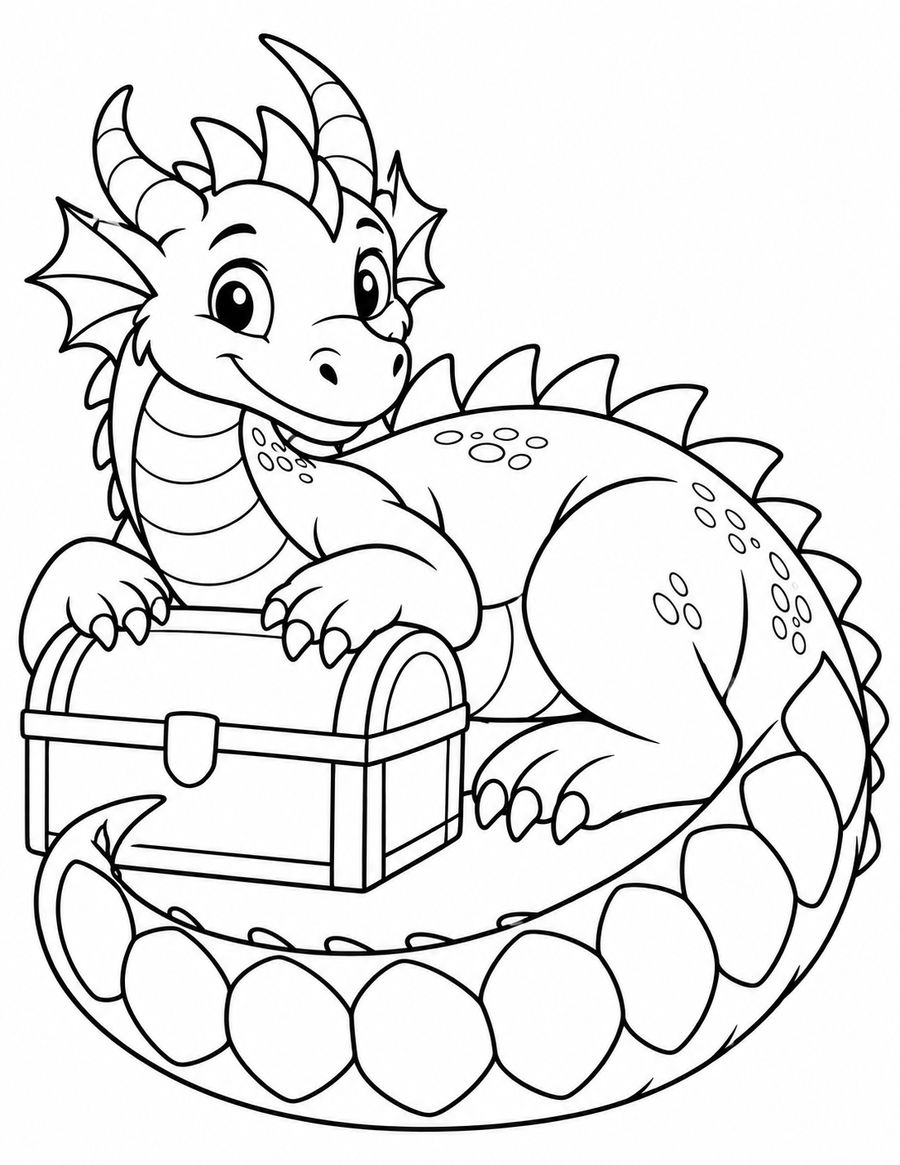
Here the dragon curls around a treasure chest, but the “treasure” is the pattern the child invents on the tail. Start near the dragon’s body and work toward the tail tip. Try a sequence such as blue–blue–gold, blue–blue–gold. Then choose one scale to become a surprise gem color. Can somebody else find the intentional exception?
Ask your child to announce the repeating rule before coloring. When they finish, take turns pointing out the repeat and the single surprise scale. This turns the page into a little observation game.
Make it easier with two alternating colors and no surprise. For a harder version, try a growing pattern: one green scale, two blue scales, three green scales, wherever the available patches allow. Stop when the drawing ends rather than forcing an exact count.
- Say your tail-color rule out loud.
- Repeat it from the body toward the tail tip.
- Optionally change one scale into a surprise gem color.
Download this free printable (PNG)
Ask your child: Can someone find the scale that breaks your rule on purpose?
4. Solve the nine-square belly
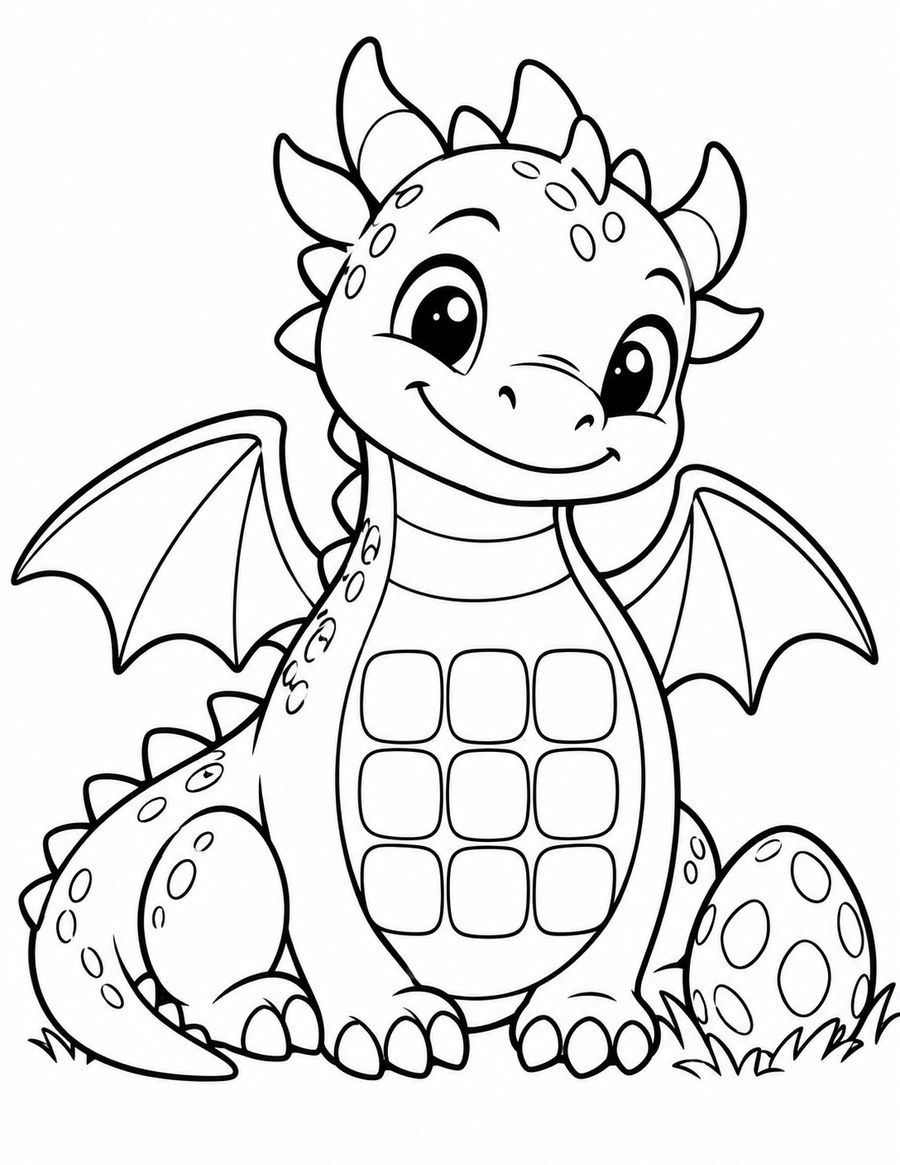
This baby dragon has a clear three-by-three grid on its belly. The small space makes it a good place to test a rule before coloring the rest of the page. Choose three colors. One playful challenge is to color each row with all three colors, then start the next row with a different color. Another is to make the center square a “magic scale” and create a mirrored pattern around it.
Draw a tiny three-by-three grid on scrap paper first if your child wants to plan. Let them point to the center square and explain why it is special. Then transfer their plan to the dragon.
Make it easier with a two-color checkerboard. For a harder version, use three colors so that no two neighboring squares in the same row have the same color, and ask the child to explain how they checked.
- Pick two or three colors and choose a grid rule.
- Color the nine belly squares before the rest of the dragon.
- Explain where the pattern repeats, mirrors, or changes.
Download this free printable (PNG)
Ask your child: What makes the middle square special in your design?
Turn the pages into a short activity session
One printable can be enough for a short break. Ask the child to pick a dragon, choose a rule, and tell you how to recognize it. If they want to continue, try a second page with a different kind of rule—color sequence on one, symbol code on another. Displaying two finished pages side by side helps children see that the same theme can support very different ideas.
For a group, print the same page for everyone. Invite each child to invent a rule privately, then let partners guess it from the finished coloring. Keep the guessing friendly: a rule may be intentionally hidden or may change while the child works. The aim is creative noticing, not a test.
The pages also work for a child who simply wants to color dragons. The pattern prompts are optional. If a child fills the wings pink and the tail rainbow, that is a valid way to enjoy the printable. Start with one page instead of printing all four if you are unsure which challenge will appeal.
🐉 More dragon coloring collections
6 hand-picked coloring page sets on the same theme.