Free space printable
3 Astronaut Helmet Design Pages for a Space Mission
Design a moon, planet, or deep-space astronaut helmet with three free coloring prompts. Each page gives kids a different mission and room to invent their own details.
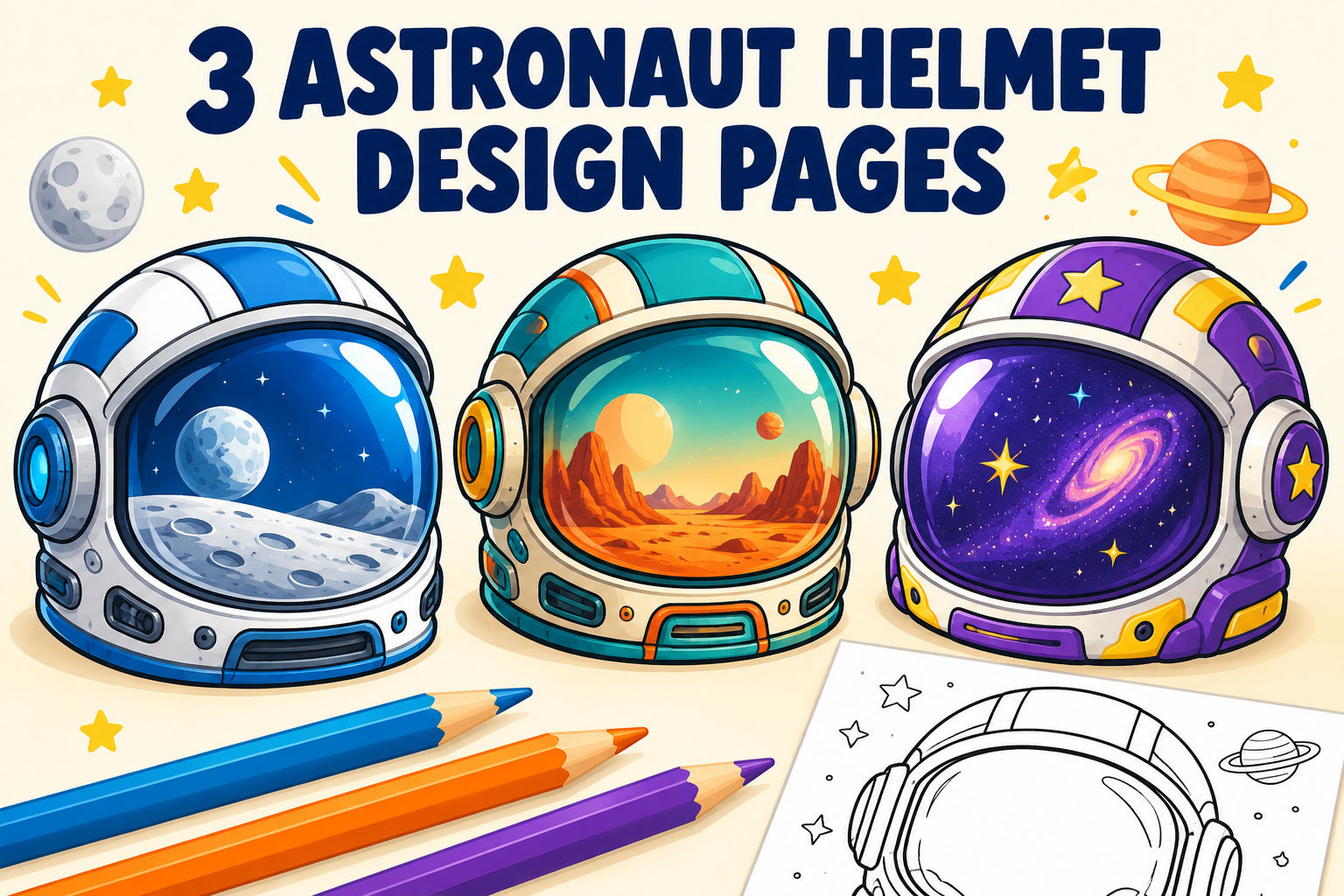
What would an astronaut need to see on a mission? A moon landscape, an unknown planet, or a dark sky full of stars might each call for a different helmet design. These three coloring pages make the helmet the main event. Each free sheet gives children a large empty visor to customize, plus just enough of a space scene to suggest a mission.
The activity works without a science lecture. A child can simply choose colors and add a symbol. A child who loves inventing stories can give the astronaut a name, a destination, and a reason for every design choice. Treat their invented equipment as imaginative play, not a claim that a real astronaut suit works that way.
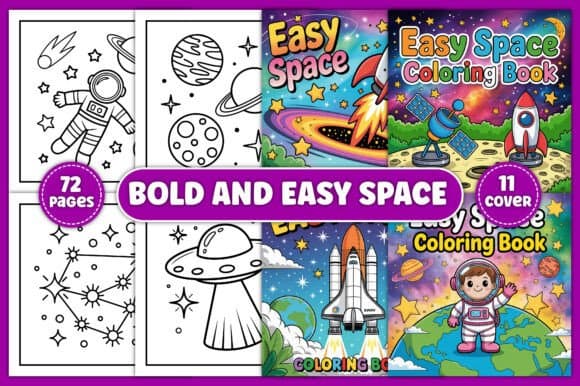
The colorful cover above is an illustration, not a fourth downloadable page. The original BoysColor printables below are separate from the optional Creative Fabrica product near the end.
Choose the mission before the colors
Print one page at Fit to page on Letter or A4. Choose crayons, colored pencils, or washable markers that suit your paper. Before starting, ask the child to pick one mission. That decision gives the picture a purpose and makes it easier to begin than handing over three designs at once.
A child can draw inside the open visor or leave it lightly colored as a reflection. Both are valid designs. Use these scenes for make-believe play; the pictures are not technical diagrams of real space equipment.
- Pick the moon, new-planet, or star-mapping mission.
- Choose one main color for the helmet shell.
- Add one mission detail in the visor, or keep the visor simple.
1. Moon-walk lookout helmet
The mission is to help this astronaut look for a safe path across a rocky moon. Have the child color the helmet’s outer shell first. Then ask what the astronaut should notice through the visor. The child can draw one large crater, a flag, or a trail inside the blank visor. They can also leave the visor lightly colored if they would rather imagine the view.
Choose a color for the broad side panels that stands out from the gray or purple moon rocks. The point is visual contrast and personal design, not a rule about real spacesuits. For a short session, completing the shell and one visor detail is enough.
- Color the helmet shell.
- Choose one thing the astronaut could see through the visor.
- Make the side panels stand out from the moon rocks.

Download this free printable (PNG)
Ask your child: What would this astronaut notice first on the moon?
2. New-planet explorer helmet
This astronaut has reached a place nobody in the story has visited before. Ask your child to invent the planet’s name and choose two colors for it. One can color the background; the other can become the helmet’s special patch. They can draw a simple symbol in the blank patch: a spiral, a star, or a made-up creature.
What might the astronaut see in the visor? A tall plant, colored hills, or another explorer would all change the story. If drawing inside the visor is frustrating, let the child color it as a single reflective shape. The symbol and color choice still make the helmet their own.
- Name the imaginary planet.
- Choose two colors for its landscape and helmet patch.
- Draw a simple symbol in the patch.

Download this free printable (PNG)
Ask your child: What would you call this new planet?
3. Star-mapping mission helmet
The astronaut’s job is to choose a route through the stars. Color the five background stars, then invite the child to connect two or three of them with a pencil line. The line is an imaginary route, not a scientific star chart. Next they can make a small matching route mark on the visor or choose a bright visor color that reflects the stars.
Ask where the route ends. Does it lead to a space station, a quiet planet, or home? Let the child decide whether the helmet looks ready for a long trip or a quick visit. If they want to keep going, write their destination on a separate slip of paper and display it beside the finished page.
- Color the five stars.
- Connect two or three stars to imagine a route.
- Give the astronaut a destination.

Download this free printable (PNG)
Ask your child: Where does your route through the stars end?
Make a tiny mission gallery
One helmet is plenty for one sitting. If the child eventually colors all three, place them side by side and ask what changed between the missions. The moon lookout might use bold side panels, the planet explorer may have a personal patch, and the star mapper may have a bright visor. A child can point to a choice they are proud of without ranking the pages.
These pages offer a different task from our three-page Space Coloring Adventure, which follows a rocket journey across connected scenes. Here the child designs the astronaut’s equipment around three separate imagined missions.
🚀 More space coloring collections
3 hand-picked coloring page sets on the same theme.